
Bench Warrants in Waller County
A bench warrant is court process tied to a missed duty, not a public list of new charges. Waller court materials point to missed settings, failure to answer a citation, contempt, release-condition violations, and an unpaid fine or judgment. The case that set the duty determines the venue.
Traffic and Class C matters usually sit with a JP or municipal judge. A felony setting belongs to the assigned criminal court. Family or juvenile matters have separate court and confidentiality rules, so a public search should not be treated as a full record.
Four Waller County JP Courts Keep Separate Bench Records
JP1, JP2, JP3, and JP4 handle their own traffic and Class C dockets. A notice that names JP1 should go to Hempstead's JP1 clerk; JP2 sits in Waller; JP3 is also in Hempstead; and JP4 is in Brookshire. The city of Brookshire has a separate municipal court, so a place name alone does not identify the issuing judge.
JP1 publishes several citation options, including payment plans and dismissal requests. JP2 lists longer weekday hours, but no warrant-only counter. The citation or cause number is the best way to distinguish a county JP matter from a city ticket.
How a Bench Warrant Is Issued
A missed setting or unanswered citation can lead the judge to issue process under the rules for that case. The court records the event in its docket, while authorized peace officers may receive service information through law-enforcement systems. Waller County does not expose one public bench-warrant index across the courts.
The label may be FTA, bench warrant, capias, or capias pro fine. Ask the clerk which one appears, what action is required, and whether a new court date has been set. Do not assume a mailed warning or a grace period unless the issuing court confirms it.
JP2 Hours Do Not Create a Warrant Window
JP2 publishes Monday-through-Thursday hours until 6 p.m. and a shorter Friday schedule. Those are office hours, not a promise of same-day warrant review or a special walk-in docket. Call the clerk with the cause number and ask whether a personal appearance, payment plan, or judge's setting is required.
The official JP2 page shows the court contact and payment route. Its weekday schedule can help a person plan a call, but the clerk must confirm the current calendar before a trip.
The JP2 contact page displays the court’s local contact and payment route.
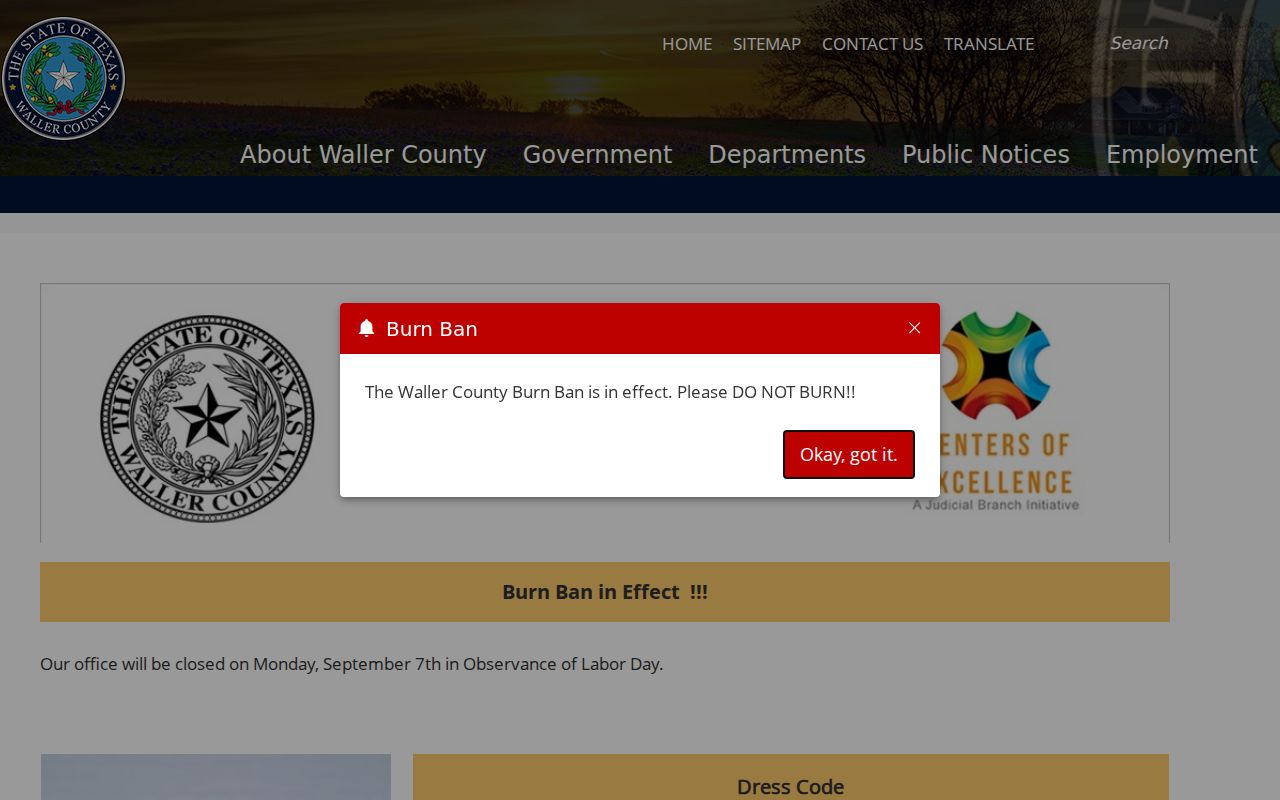
Use the precinct number on the citation to keep this route separate from other courts.
Bench Warrant vs Arrest Warrant
Both forms can lead to an arrest, but they start from different events. A bench warrant follows a failure to meet an existing court duty. An arrest warrant is based on a probable-cause review tied to a criminal accusation. The arrest-warrant process has a different court and service path.
| Feature | Bench Warrant | Arrest Warrant |
|---|---|---|
| Trigger | Missed setting, contempt, or court noncompliance | Probable-cause basis in a criminal matter |
| Issuer | Judge handling the existing case | Judge or magistrate with authority |
| Case status | Existing case continues | May begin an arrest process before a first setting |
| Next step | Ask about reset, recall, appearance, or payment | Ask counsel and the court about bond and appearance |
Capias Pro Fine Is a Fine Enforcement Process
Texas uses capias pro fine language for process tied to an unpaid fine or judgment. In Waller County, it commonly matters in JP and municipal traffic or Class C cases. It is not a new probable-cause warrant for a separate offense. The court may require payment, a plan, a show-cause setting, or another step under its rules.
- FTA
- A recorded failure to appear or answer as the court required.
- Recall
- An order withdrawing process; the issuing court controls it.
- Quash
- A court action that sets process aside.
Ask the clerk whether the status is only an FTA entry or a separate warrant, and what event will clear each record.
How to Resolve a Bench Warrant
Identify the court before sending money or appearing. The public sources do not show a universal Waller recall form, surrender window, or bond-counter schedule. A clerk can explain whether the case calls for a reset, payment plan, compliance filing, attorney motion, or personal appearance.
- Read the citation or court paper and write down the court and cause number.
- Call that clerk and ask whether an FTA, capias, or capias pro fine is recorded.
- Ask if a lawyer may request recall or reset and which filing or proof the judge needs.
- Confirm whether you must appear, where to appear, and how payment or a plan changes status.
- Request a receipt or docket note and ask when sheriff or DPS records will update.
Caution: Do not assume a call or online payment clears a warrant; confirm the court's recall instructions before appearing or paying.
JP3 Payment Rules Need a Clerk Check
JP3's current page describes traffic forms and says the court takes cashier's checks or money orders, not debit or credit cards. That payment rule does not establish whether a warrant can be resolved by mail. Ask first if the judge needs an appearance or a separate motion.
The JP3 forms and contact page also carries hours that should be checked before visiting. A mailed payment can satisfy a fine while leaving an FTA or warrant step open.
The JP3 official page displays the local forms and payment restrictions.
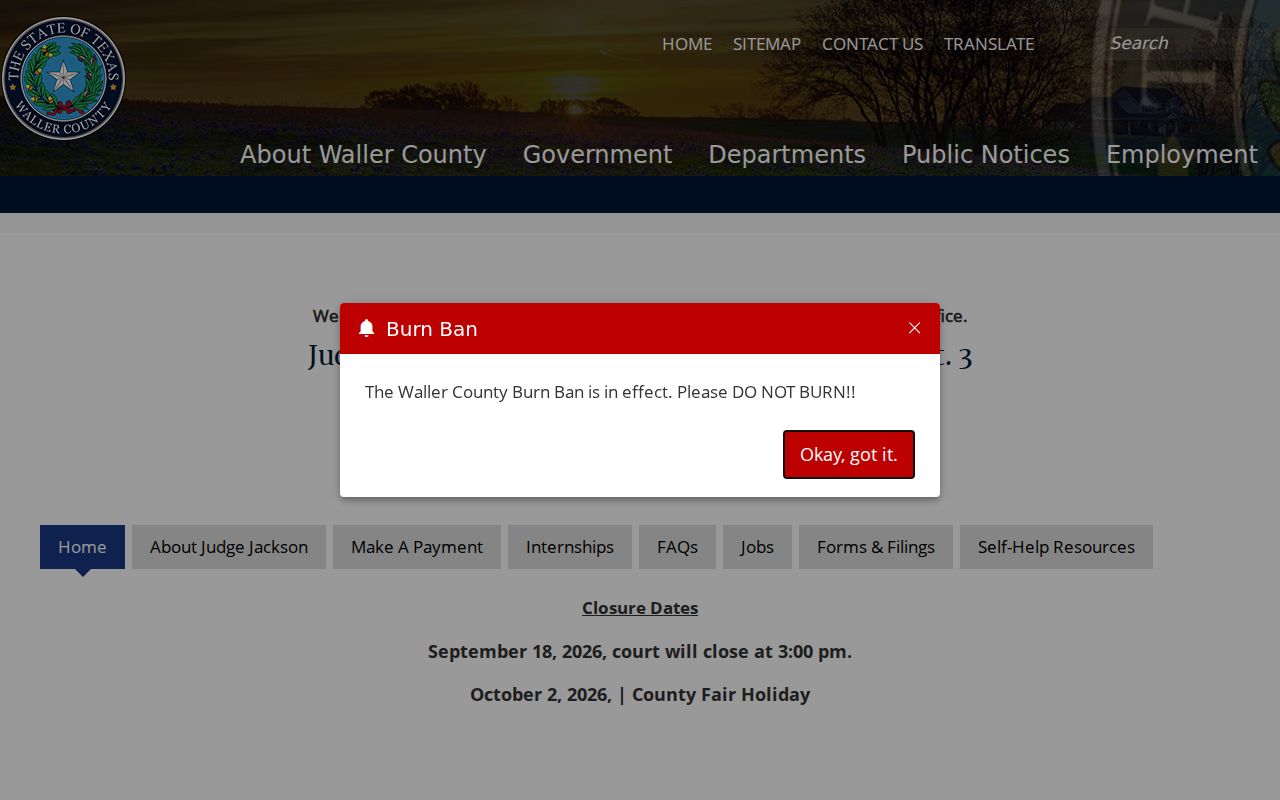
Confirm the case status and accepted route with the clerk before mailing anything.
Which Waller County Court Issued It
The court that set the obligation controls the recall, reset, payment, or next hearing. The sheriff may serve a warrant but cannot change the underlying court docket. For a felony, contact the 506th District Court; for a JP or city citation, use the court printed on that record.
County misdemeanor assignments can shift between County Courts at Law. Use the case number to ask the County Clerk or court coordinator where it is assigned. A Waller County warrant search can help route the record, but the clerk's current case file supplies the answer.
Waller County Recall Rules Are Venue Specific
The research found no countywide motion-to-recall form, universal fee, or sheriff walk-in rule. CCL2 publishes criminal forms, while JP pages publish traffic options that are not labeled recall motions. A city court may use another process. Ask the court coordinator which form, proposed order, or setting applies to the case.
For family or juvenile process, contact the responsible court or counsel. Juvenile warrant papers are confidential under Texas Family Code section 58.010. A public-information request cannot replace a filing, and an ordinary payment receipt may not show that a separate bench warrant was recalled.